
This is the first of the international Newsletters coming from ICEC looking at a bi-monthly news from a range of other European stateless nations.

Euskal Herria – The Basque Country
50 YEARS SINCE THE EXECUTIONS OF TXIKI AND OTAEGI
Last September marked the 50th anniversary of the executions of Txiki and Otategi, two Basque militants executed by Franco’s fascist regime two months before the dictator’s death.
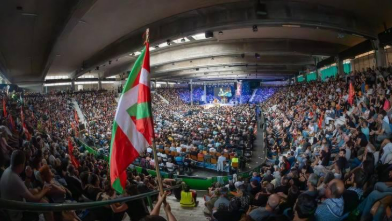
To mark this anniversary, several exhibitions and commemorative events have been held as well as a mass rally in Iruñea (Pamplona), attended by over 5,000 people.
Although the Spanish Left has attempted to exploit the figures of Txiki and Otaegi by depicting them as “anti-fascist fighters,” we Basque patriots know full well that they fought not only against Franco’s dictatorship but also for the independence of Euskal Herria, like all ETA members of their generation. Franco died in his bed 50 years ago, but Euskal Herria has yet to achieve its freedom.
On November 22, the Basque patriotic Left has organized a national demonstration in Bilbao with the slogan “Askatasunaren Haizea” (Wind of Freedom), to demand independence for the Basque Country and to remember Txiki and Otaegi as well as all of the Basque patriots executed by Franco’s regime
NEW POLITICAL STATUS FOR THE WESTERN BASQUE COUNTRY
There was an attempt in 2005 by the Basque government of that time, led by the Lehendakari (President) Ibarretxe , which aimed to reform the political status approved in 1979 for the Western Basque Country (Basque Autonomous Community). The political status did bring about certain freedoms and autonomy to this part of our country, but it has been systematically violated by the Spanish government since then.
In short, this reform proposed a confederation model for Spain in which the Western Basque Country would enjoy extensive political autonomy (economic and financial autonomy had already been achieved in 1979) . It would have inaugurated a political relationship in which the Western Basque Country would have been an equal footing with Spain. Although the Basque Parliament approved this political project in 2005, the Spanish government and judiciary struck it down.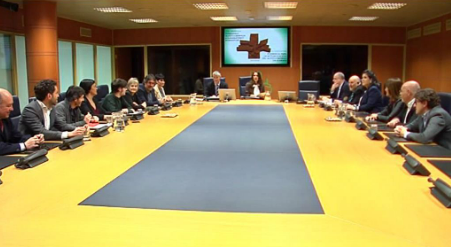
After 20 years of waiting, the two main Basque nationalist parties in the Autonomous Community of the Basque Country (the nationalist right and the nationalist left) have resumed the project and are drafting a new political status in which the Basque PSOE, dependent on the Spanish Socialist Party, is also taking part.
PSOE’s participation in this political project makes us fear that it will not go along with national ambitions. Although the Basque nationalist Left and Right argue that the text should include the right of the Basque people to decide their political future (a euphemism for the right to self-determination), it does not appear that the PSOE will embrace this point.
There is also talk of the status recognizing the national character of the Basque Country and establishing a political relationship in which the Basque and Spanish governments would be on an equal footing, so that the Spanish government would have no possibility of interfering—as it does now—in the political decisions taken in the Western Basque Country.
It is expected that a draft of the new political status will be presented in the coming weeks.
Vlaanderen – Flanders
Belgium’s Deepening Political Deadlock
Belgium once again finds itself in a profound political stalemate. Months after the elections, the Brussels Region remains without a government as the Francophone Socialist Party continues to reject any coalition that would include a Flemish majority involving the N-VA. Meanwhile, the federal government is paralyzed by its inability to agree on a necessary budgetary adjustment of at least 10 billion euros – a figure experts consider the minimum to maintain fiscal credibility. This dual impasse underscores the chronic dysfunction of the Belgian state, where linguistic and ideological divides repeatedly block effective governance. What began as a temporary negotiation delay now reveals a deeper constitutional crisis – one that could ultimately spell the end of Belgium as a viable federation.
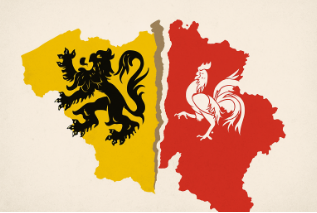 In this context, ICEC-Vlaanderen has been established to launch a think tank aimed at expanding public awareness and support for Flemish self-determination. Its mission is to explore and communicate why a self-governing, independent Flanders represents the only realistic alternative to an ungovernable Belgium. For decades, federal compromise has masked structural failure; today, that façade is collapsing. The time has come for Flanders — and for Wallonia as well — to shape their own futures as free and responsible nations. Only through independence can both regions escape the inertia of a state that no longer works.
Alba – Scotland
In May 2026 there will be elections for the Scottish Parliament. The Scottish National Party has been in government for 18 years. The Scottish Greens have 7 seats so that gives a pro-independence majority.
There are problems having a party in power for such a long time. Problems mount, politicians get tired and become middle managers not innovators. A year ago there was a possibility that the SNP might lose power but that is now unlikely. This is not because SNP support has significantly increased but because of what has happened to opposition parties. The Labour UK Government has become hugely unpopular and on the political right the vote has split between the Conservatives and the far-Right. Green support here has gone up only slightly.
Support for independence has remained steady at around 50%. Several polls have shown it rising but only about 2%. We have a clear majority of those under 50.
One interesting development is that there are now more women supporting independence than men. In the past it has always been the reverse.
The wider independence movement suffers from too many different factional groups convinced that only they have the strategy to take us forward.
Next May’s election will give us a clearer picture.
Isobel Lindsay
Sud Tirol
In terms of autonomy policy, things are not looking particularly good in South Tyrol at the moment.
Several pillars of autonomy are currently under attack from the Italian nation state.
 Autonomy reform: A far-reaching reform of South Tyrolean autonomy (a kind of constitution designed to guarantee minority protection for South Tyrol in Italy) is planned in Rome, which envisages major changes, including negative ones for the Autonomous Region of Trentino-South Tyrol. One concern shared by most experts is the national interest, which is to remain enshrined in the autonomy statute, as well as the weak wording of the consent clause, because in the event of a lack of agreement between the province and the state, Rome will ultimately decide again. Likewise, in future, the ‘Autonomous Province of South Tyrol’ will also have to be officially referred to as ‘Südtirol/Alto Adige’ in German. This means that names invented by fascists will also be enshrined in the German name in future. A total of 29 points of the statute will be amended or expanded, with only a few offering any obvious advantages for the South Tyrolean population. Most of the changes concern bureaucratic procedures, such as the operation and regulation of public services of provincial and local interest.
The proportional representation rule is being abolished de facto!
One of the great achievements of the South Tyroleans is the rule of ethnic proportional representation: Ethnic proportional representation (Italian: proporzionale etnica, Ladin: proporz etnich) is a legal regulation established by the Statute of Autonomy, which is applied in South Tyrol in the allocation of jobs in the public sector, the distribution of public social benefits and the budgetary resources of the provincial administration. Ethnic proportional representation guarantees proportional consideration of the three legally recognised language groups (German, Italian, Ladin) in accordance with their strength as determined in language group surveys. Through a so-called ‘flexible proportional representation’ system, even the South Tyrolean People's Party (SVP) wants to “temporarily” abolish ethnic proportional representation in order to eliminate the problem of skilled labour shortages. ‘What is being sold as an emergency measure is in fact creeping up to become the new normal,’ warns provincial commander Christoph Schmid. ‘The proportional representation system, which was introduced with good reason as a protective mechanism for the German and Ladin language groups, is thus being reduced to absurdity.’ The Schützenbund is particularly critical of the fact that no clear and verifiable criteria for the existence of an actual emergency situation have been presented. ‘If, in future, it is sufficient to claim a shortage of applicants in order to systematically deviate from proportional representation, then this is no longer an exception, but a deliberate change of course,’ Schmid continues.
Mother language teaching is under threat: The right to be educated in the mother tongues of German and Ladin was a major achievement for South Tyrol. At the start of the school year, constant attacks on this right are once again a topic of discussion. It is becoming increasingly difficult for German-speaking children to actually speak German in German schools, as the mass influx of Italian and foreign children into German schools has become a problem in certain areas. Local politicians are clearly unwilling to improve the situation. In some schools, the education system is on the verge of collapse. There are now even protests by teachers and their unions.
Positive developments in terms of autonomy policy are currently only evident to a very limited extent. This development makes it necessary for the South Tyrolean Schützenbund and other organisations to remain vigilant in order to continue to monitor the protection of Germans and Ladins in South Tyrol and to intervene if necessary.
Andreas Kostner
Països Catalans
Celebrating Democracy on the 50th Anniversary of the Death of the Spanish Dictator Franco
For Catalans, 20 November is a date of remembrance and celebration — not only because it marks th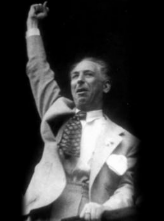 e death of Spain’s last fascist dictator, Francisco Franco, but also because it reminds us that his ambitions, rooted in centuries of Spanish supremacism, have not succeeded in extinguishing Catalan identity, language or democratic aspirations.
Although Franco died in 1975, the machinery of his regime did not vanish with him. There were no dismissals, no cleansing of institutions. Judges, military officers, police, and senior officials who had served under the dictatorship remained in place. Rather than dismantle the regime, Franco ensured its continuity by restoring the Bourbon monarchy — installing a king he had personally groomed — as the guardian of Francoist values.
Unlike German fascism, Spanish fascism has never been put on trial. Crimes against humanity committed under Franco’s rule were met with impunity, and the repression continued after his death: more than 700 people were murdered after 1975. Without a renewal of judicial and institutional power, decades of authoritarianism simply carried on beneath the surface, even as the world believed democracy had arrived in Spain.
On this anniversary, we pay tribute to all those who suffered and died at the hands of this barbarity — children, women, and men targeted by a systemic Catalanophobia recognised by historians and international observers alike. Among them were prominent figures such as:
- Josep Sunyol i Garriga, President of FC Barcelona, assassinated in 1936 for his political beliefs and his defence of Catalanism.
- Lluís Companys, President of the Generalitat, executed by Franco’s forces in 1940. He faced death with unbroken dignity: eyes open, barefoot, and shouting his final words — “Per Catalunya!”
Lluís Companys i Jover
“We are a people who fight and, even if we suffer, we will win”
Their courage and sacrifice continue to inspire Catalans today as we strive for a free, democratic, and independent future. Watch 16’ shortfilm for more info: Catalonia: Peaceful Agreements or Bloody Papers? – YouTube
Celebrating Catalan Culture
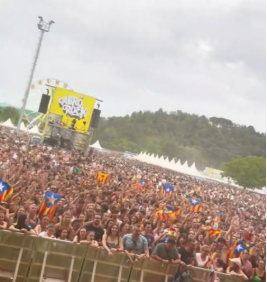 Across the whole Catalan nation — both the territories under Spanish administration and those under French control — our people continue to resist the pressures of modern state imperialism. In an age of globalisation, national cultures without an independent and sovereign state often find themselves at a disadvantage. Yet we remain steadfast. As Francesc Pujols famously said:
“The Catalan spirit always sprouts and survives its deluded gravediggers.”
And the evidence is everywhere.
Catalan creativity continues to flourish with extraordinary vitality: 2,345 musical works referenced annually, 25 books published every day, and more than 200 specialised magazines produced in our language. These are not just statistics — they are proof that Catalan culture continues to stand tall and thrive despite constant obstacles.
A powerful example of this resilience can be found in the booming Catalan music scene. Concerts across the country are filled with young people proudly singing in Catalan — and often shouting for independence. Festivals such as CabróRock show how deeply rooted this cultural energy is. And in Barcelona, a new milestone has just been set: for years, the record for the largest single-artist concert attendance belonged to Coldplay. But now the Catalan group Oques Grasses has smashed that record spectacularly. All 55,000 tickets for their Olympic Stadium concert sold out in just 21 minutes, prompting the scheduling of four consecutive shows. That’s 220,000 people — mostly young, but not only — united in celebrating live Catalan music and culture.
So on 20 November, even though we still do not live in a free and fully democratic Catalan state, we celebrated. We celebrated because we know that, ultimately, the future belongs to us. Victory will be ours.
And in the words of Oques Grasses:
“So strange and so beautiful,
Between miracle and disaster is where we live.
A sky of lights to make you happy —
The night shines, and it shines for you,
Because you are here.”
Anna Arqué i Solsona
Veneto
The End of an Era and the Autonomy Test: The Five-Way Race for the Veneto Region
The regional elections in 23 – 24 November 2025 will mark the close of an era for the Veneto region. After 15 years of unchallenged governance, the popular President Luca Zaia is barred from standing again, leaving behind a crucial, unresolved matter: the unfulfilled pledge of Regional Autonomy.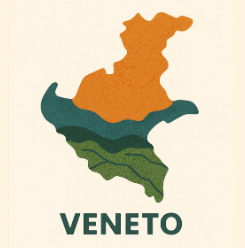
The demand for self-governance is a key political issue, underscored by the 2017 autonomy referendum organised by Zaia, which saw massive participation (68% turnout) and a near-unanimous result (99% Yes). Despite this clear display of popular will, no tangible progress has been achieved, resulting in a profound sense of political betrayal.
The Centre-Right candidate is Alberto Stefani, a Deputy and Deputy Secretary of the Lega party. Stefani is tasked with managing the ambiguous inheritance of the Lega, which has evolved from an autonomist force (“Lega Nord”) into a nationalist Italian right-wing movement. Whilst attempting to present himself as a continuity of the “Zaia System,” he is perceived by many as complicit in the shift that abandoned the regional cause.
Opposing him is the Centre-Left and Five Star Movement coalition, led by Giovanni Manildo, the former Mayor of Treviso. Their strategy focuses on exploiting the outgoing administration’s weaknesses: the management of Healthcare, which is plagued by long waiting lists, and the high costs of major infrastructure projects. Like the Centre-Right, Manildo’s coalition is comprised of national parties that tend to sideline the issue of Autonomy, but which enjoy an incredibly superior media visibility compared to the territorial movements.
This scenario has created space for key alternatives seeking to capture the disillusioned electorate. Riccardo Szumski (Resistere Veneto) and Fabio Bui (Popolari per il Veneto) are prominent among those aiming to gather the “orphans” of the old Lega Nord. Szumski’s movement represents the frustration over autonomy and attracts some anti-vaccination voters, while Bui proposes a long-term, Bavaria-inspired regionalist project. Completing the line-up is Marco Rizzo, running on a communist platform, presenting himself as an ideological alternative to modern progressivism.
The Veneto elections are therefore more than a simple clash between national blocs. They serve as a vital test on the region’s political identity and the resilience of its autonomist demands in the face of increasingly centralised Italian politics.
Alessandro Galante
Breizh – Brittanny
Brittany is on the move…Yes Breizh is a wave carrying hope for the Bretons.
We are beginning to understand that the status quo in which Paris has left us for so long is actually a straitjacket that must be shaken off.
But not just doing things through old ways! Moving forward methodically. Resolutely. Patiently but with determination.
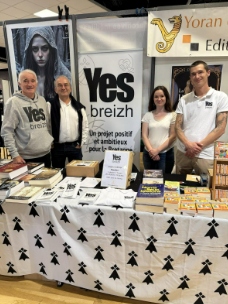 What do we want? To have, by 2032, as many devolved rights as our cousins across the Channel in Wales and Scotland.
For what purpose? To allow our economy to develop without the limits that Paris imposes on us without consultation.
To find solutions to the everyday questions that Bretons ask themselves regarding housing, purchasing power, transportation, energy transition, etc.
Why? Because expecting everything from a central government in decline is nothing but wasted time and effort.
And? Finally, we must obtain official status for our national language, Breton, the last Celtic language on the continent!
We must achieve the reunification of our country with its southern part, which has been separated from us since the Second World War.
Our Yes Breizh team-
Many exciting projects, a motivated team, and a growing membership every day.
Yes to a Brittany building its future, starting today!
You are going to hear about Brittany!
Izold Guegan
Cymru – Wales
YesCymru: A Nation Growing in Confidence – The Future of the Welsh Independence Movement
The movement for an independent Wales is entering its most confident and dynamic phase in modern history. What was once considered a fringe ambition has rapidly become a mainstream political conversation – and, increasingly, a credible national project. As fellow members of ICEC will recognise from your own national journeys, moments of political awakening often come gradually and then all at once. In Wales, that tipping point now feels closer than ever.
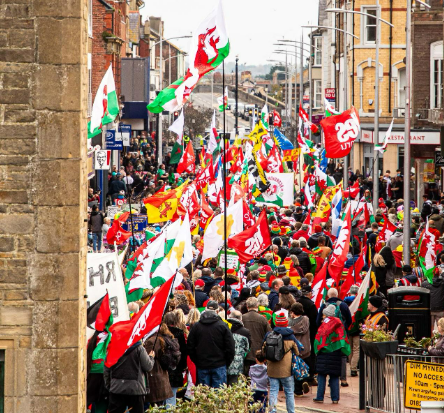
One powerful symbol of this momentum was the recent YesCymru Independence March in Rhyl, held on the north coast of Wales. Thousands of supporters filled the streets, transforming the town into a sea of red and green, with Welsh flags and banners stretching from end to end. This was not simply a march – it was a statement. Ordinary people from every corner of the country, from every background, came together with a shared belief: Wales can and should chart its own future.
And crucially, the public mood reflects this growing confidence. Support for Welsh independence has surged dramatically in recent years. Where once support lingered in single-figure percentages, recent polling has shown it rising as high as 41% – a historic high. Among young people, support has soared to 72%, signalling that the next generation sees independence not as a radical departure, but as a normal, democratic step forward. This mirrors patterns seen across Europe’s stateless nations, where younger voices are often the most enthusiastic champions of self-determination.
Political shifts within Wales further underline this momentum. The next Senedd election in 2026 is expected to deliver a major milestone: Plaid Cymru – the main pro-independence party – is projected to become the largest party for the first time in its history. Such a result would mark a profound realignment in Welsh politics and would place the question of independence firmly at the heart of national debate.
We have already seen what this change could look like. In last year’s Senedd by-election in Caerphilly, pro-independence parties collectively secured over 49% of the vote – almost double their combined share in 2024. This astonishing rise reflects a growing belief among voters that independence is both achievable and desirable. It also shows that when the campaign is visible, positive, and rooted in the real challenges facing Welsh communities, people respond.
Of course, every independence movement is shaped by its own national context – but we are all united by common principles: democracy, equality, self-determination, and the belief that nations thrive when decisions affecting them are made by the people who live there.
Wales is no different. Our economy is rich in natural resources. Our cultural identity is strong and distinctive. Our language – one of Europe’s oldest living languages – is growing. And our people increasingly recognise that the political structures of the United Kingdom do not serve Wales’s interests.
The Welsh independence movement is on the rise. The future is certainly ours to decide, and YesCymru is determined to help build a free, fair, and self-governing Wales — at the heart of a community of independent European nations.
Geraint Thomas
_______________________________________________________________
ICEC
The International Commission for European Citizens (ICEC) is a transnational network working to promote the right to self-determination and peaceful democratic processes for stateless nations across Europe.
ICEC advocates for the inclusion of these nations within the European framework and supports cooperation on political, economic, and cultural initiatives.
To learn more about ICEC – visit icec.ngo for more information.